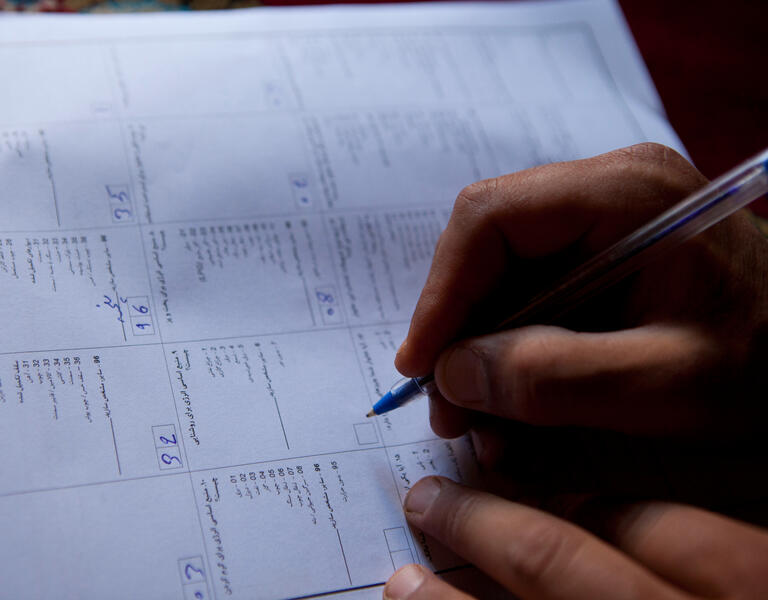
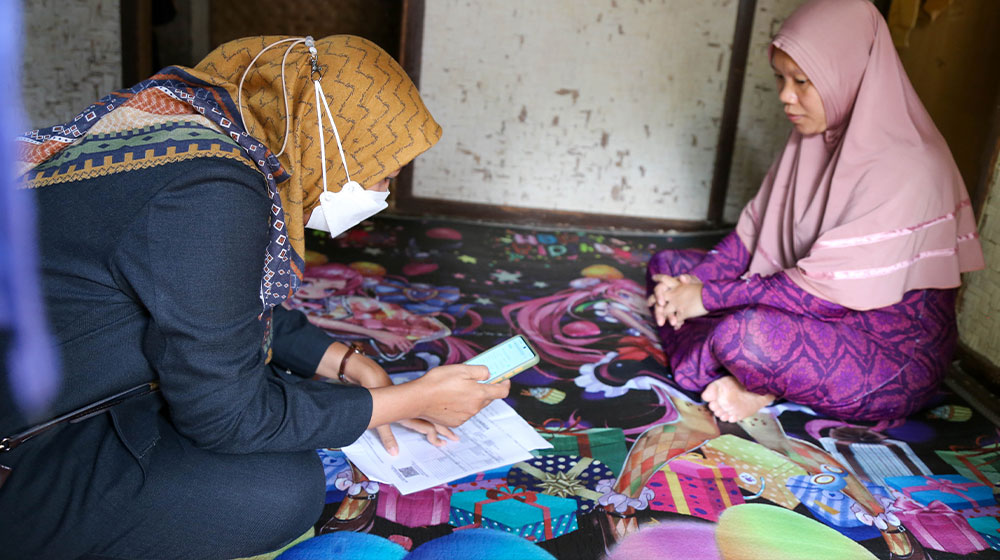
The population and housing census is among the most complex and massive peacetime exercises a nation can undertake. It requires careful planning, resourcing and implementation – including mapping an entire country, mobilizing and training large numbers of enumerators, conducting major public-awareness campaigns, canvassing all households, carefully monitoring census activities, and analyzing and disseminating and using the resulting data.
A census involves the complete enumeration of the population in a country, territory or area, and should be conducted once every 10-year cycle, referred to as a “round”. It generates a wealth of data, including numbers of people, their spatial distribution, age and sex, living conditions and other key socioeconomic characteristics. These data are critical for good governance, policy formulation, development planning, social welfare programmes, business market analyses and crisis prevention, mitigation and response.
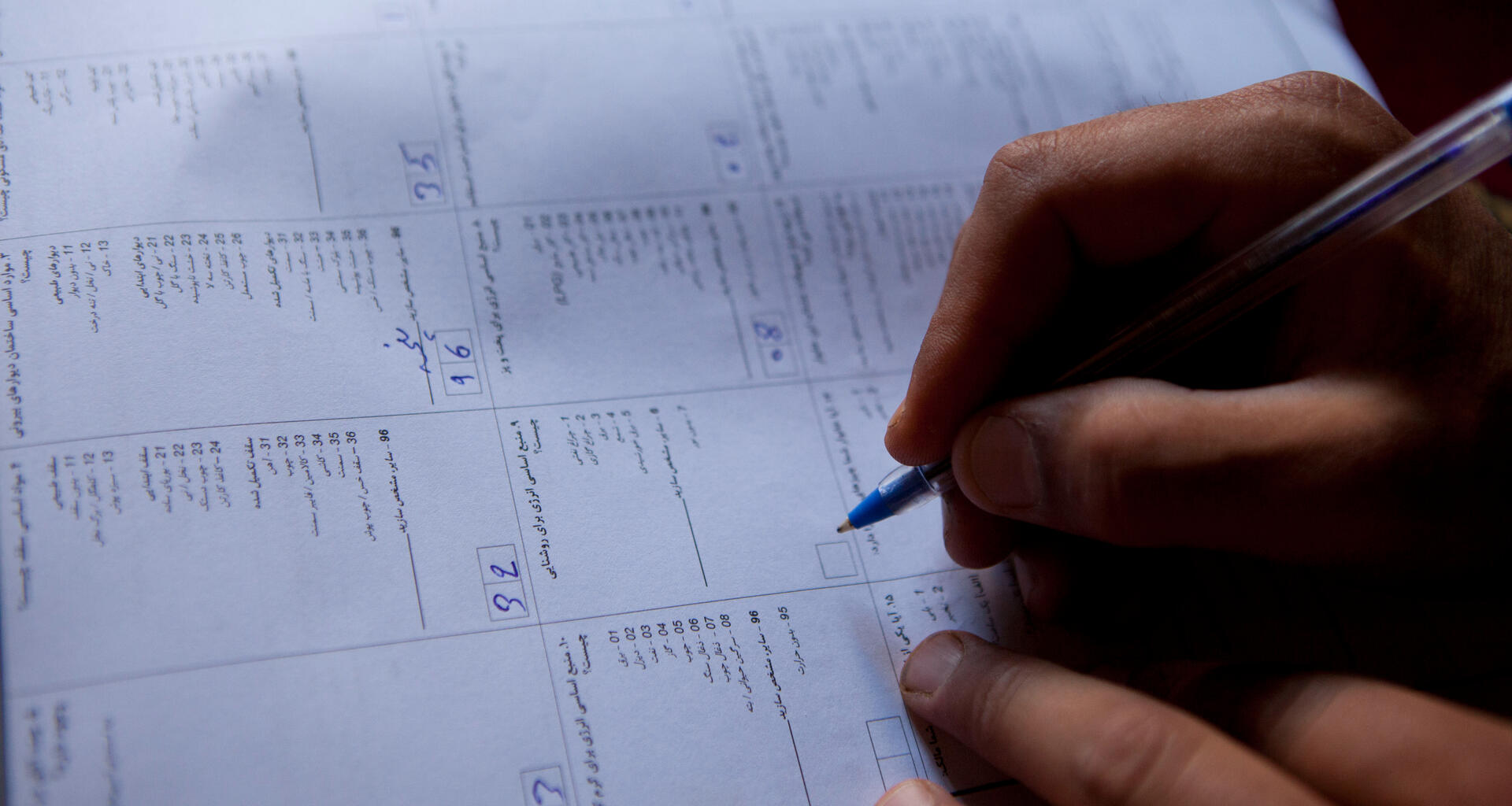

The 2030 census round, which runs from 2025 to 2034, is a decisive decade, taking place against a changing global landscape. As countries around the world pursue a range of new global commitments, including the 2030 Agenda for Sustainable Development, there is growing demand for disaggregated data at all levels.
This as the world is facing a global population data emergency: During the 2020 census round, 35 countries did not conduct a census, leaving an estimated 2.4 billion people, nearly 30 percent of the global population, uncounted and structurally invisible to planners. The data gap was further affected by the shutdown of the United States Agency for International Development and the subsequent termination of the Demographic and Health Surveys Program in 2025. While some of the services have since resumed, funding shortfalls remain.
Censuses are rapidly evolving to adopt new digital technologies, such as handheld devices and geographic information systems (GIS). Countries are also increasingly using administrative data – information collected by the government for public services – to measure and describe the population, including records from schools, health clinics, employment offices and national identity systems. When these records are of high quality and provide full population coverage, the government can use them to produce census statistics without field enumeration. This approach, known as a register-based census, builds a statistical profile of the population using existing data on characteristics such as age, gender and education attainment. However, not all countries have administrative data that cover the full range of required population characteristics. In such cases, countries may use a combined census approach, using the digital records they already have while also conducting field enumeration to collect data directly from households. This method allows them to fill any gaps in information.
These shifts in technologies and methods require modernizing national statistical systems and strengthening national capacity to collect information. This includes enhancing civil registration and vital statistics (CRVS) systems to ensure that all vital events, including births, deaths, marriages and divorces, are registered in a timely manner.
UNFPA supports countries in selecting census methods suited to their national context. It strengthens national capacity to conduct traditional censuses based on field enumeration, while also supporting countries to progressively adopt approaches that make greater use of administrative data for census purposes.
With major demographic changes under way and an increased focus on meeting the needs of all people while ensuring that no one is left behind, accurate and timely data are more important than ever. A key strength of the census is that it provides a complete statistical picture of the population, down to the smallest geographic and administrative levels of a country or region. This information underpins evidence-based decision-making across a wide range of contexts, including the design and monitoring of policies and programmes.
In many countries, the census is the only source of data that can identify patterns of social, demographic and economic exclusion, including inequalities by geographic location, race, ethnicity, religion and other characteristics. It also provides critical insights on disadvantaged regions and vulnerable populations, including people living in poverty, older persons, persons with disabilities, migrants and adolescent girls and young women.
Population data are essential for monitoring progress towards the Sustainable Development Goals, with 107 of the 232 unique indicators requiring such data. Censuses are a key source for these indicators and enable production of granular baseline population data, disaggregated by age and sex. These data are also critical for informing operations and decision-making in the early stages of humanitarian response, for example.
With censuses typically conducted every decade, many national statistics offices face capacity challenges, as it can be difficult to retain expertise between census rounds. In addition, the emergence of new technologies and methodologies often requires the acquisition of new skills, tools and institutional capacity.
Census operations, by their scale, are complex and costly and require careful planning, budgeting and timely resource mobilization. Censuses are often postponed due to insufficient funding or delays in the release of funds. Strong partnerships with key stakeholders, including development partners, civil society and the private sector, are critical to ensuring the successful implementation and continuity of census activities.
Conflict and instability in many countries also pose significant challenges for census operations. In fragile and crisis-affected settings, collecting reliable population data can be difficult or even impossible in some areas due to insecurity or inaccessibility. Also, large-scale population displacement may cause existing population information to become quickly outdated or incomplete.
UNFPA provides technical and financial support to ensure that censuses are of high quality, uphold international principles and standards, and produce data that are widely disseminated and utilized for development. It supports governments to strengthen national population data systems, helping integrate census data with other sources and generate evidence and insights to more effectively prepare for demographic change.
Since its inception, strengthening national capacity to collect, process, analyze, disseminate and use census data for development has been at the core of UNFPA’s mandate. UNFPA’s presence in more than 150 countries enables coordinated support to the 2030 census round.
In the 2030 census round, UNFPA’s key areas of support include:
- Providing technical support: UNFPA deploys census technical advisers and GIS and data-processing experts, and provides operational support and tailored technical assistance to countries based on their needs.
- Generating and sharing knowledge:
- Providing learning and training opportunities: UNFPA delivers census learning and training through regional workshops and webinars, including on innovative approaches such as digital mapping, small area estimation, geospatial analysis and e-learning courses on the basics of census and transitioning to a register-based census.
- Developing census technical and operational guidance tools. In response to country needs, UNFPA develops and disseminates technical and operational guidance covering all phases of the census cycle to support the production of high-quality censuses that meet international standards, for instance: Step by Step Census Guide, Outline of a Census Project Document, Satellite Imagery Resources for Census, Quantum Geographic Information System (QGIS) for Digital Cartography in Censuses and Surveys, Value of Modelled Population Estimates.
- Brokering South-South cooperation for census support. UNFPA facilitates South-South study tours and technical exchanges, enabling national statistical offices to learn from one another. It also supports the sharing of equipment, such as tablets, among countries to reduce cost and mitigate procurement-related risks.
- Promoting dissemination and open access to census data. UNFPA supports countries to develop digital platforms to disseminate census data and to release anonymized sample census microdata for further analysis and research. In addition, UNFPA maintains the Population Data Portal, an interactive, web-based data platform that integrates quantitative and geospatial data, including census data, with built-in analytic functions.
- Leveraging institutional partnerships. UNFPA has established strategic partnerships at global, regional and national levels to strengthen the effectiveness and efficiency of census support. These include collaborations with the UN Regional Economic Commissions and UN Statistics Division as well as ESRI, the Ministry of Data and Statistics of the Republic of Korea, the United States Census Bureau, the University of Southampton/WorldPop and the World Bank.
-
Mobilizing resources for censuses. UNFPA supports resource mobilization at country, regional and global levels. At the global level, UNFPA aims to mobilize an estimated $75 million annually through 2030 to modernize censuses, strengthen CRVS systems and train a new generation of population data experts. In addition, UNFPA serves as a key convener and broker, supporting countries to access financing from multilateral development banks, the private sector and domestic public resources.
Updated 11 May 2026