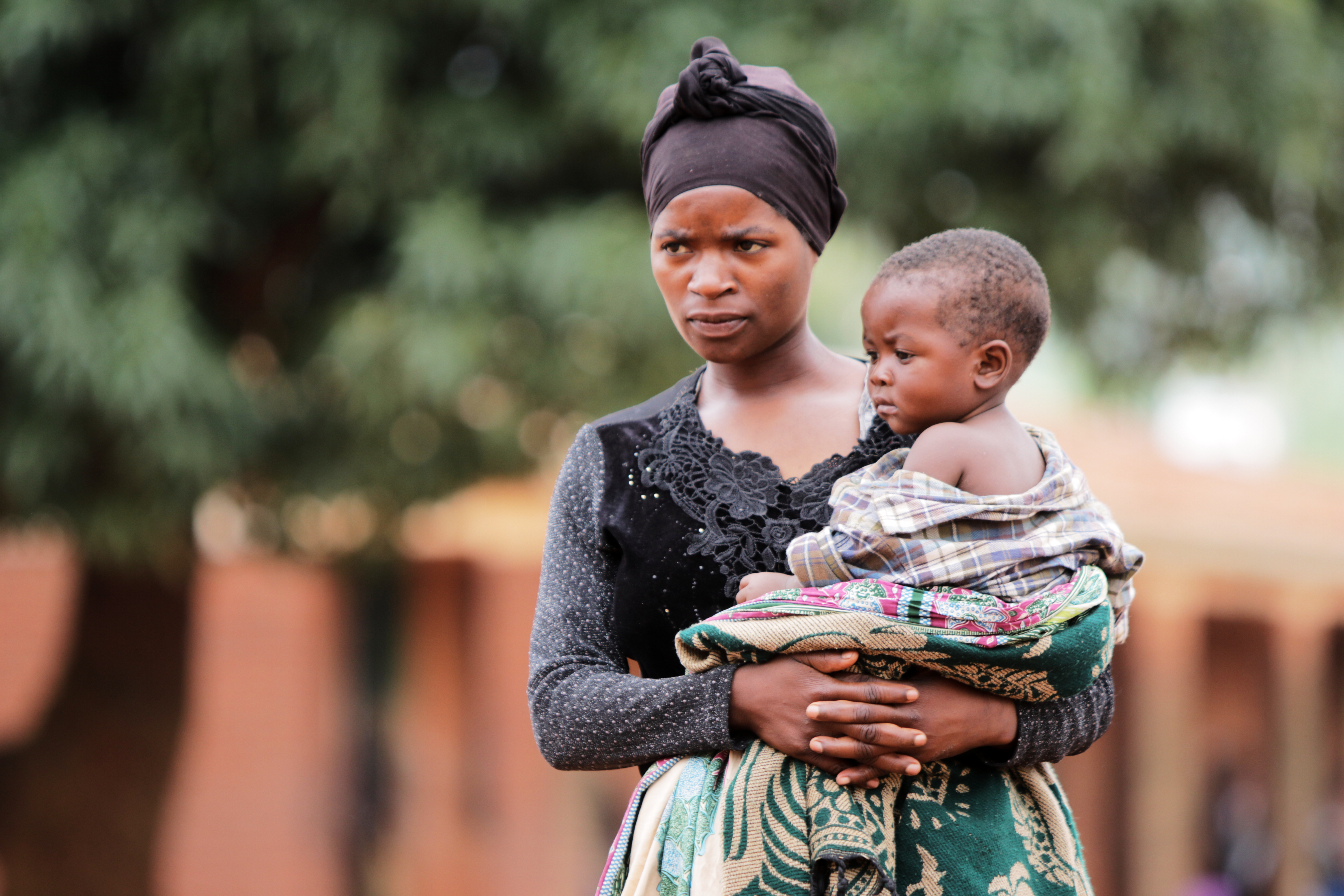
The Maternal and Newborn Health Fund is a flagship UNFPA initiative, delivering catalytic investments and targeted support to power country-led solutions that save lives, strengthen health systems and turn national and global commitments into action.
Accelerating the reduction of preventable maternal deaths by 2029 is one of four priorities in the UNFPA Strategic Plan 2026–2029. The Maternal and Newborn Health Fund is guided by Start with Her: UNFPA Strategy for Reproductive, Maternal and Newborn Health and Well-Being 2025–2030 and built on four core pillars:
- COMMIT to a financial, legal and policy environment conducive to integrated reproductive, maternal and newborn health and well-being.
- DELIVER access to quality reproductive, maternal and newborn health services through strengthened, more resilient and integrated health systems.
- EMPOWER women and communities to be active agents of change to exercise their rights to reproductive, maternal and newborn health.
- LEVERAGE data to drive quality and accountability.
The fund is needed more than ever. Every day, 712 women die from pregnancy and childbirth complications, 6,300 newborns do not survive the first 28 days of life, and 5,200 more are stillborn. Maternal mortality has fallen by 40 per cent since 2000, proving that progress is possible. But that progress remains deeply unequal. A woman’s chances of survival still depend heavily on where she lives, whether she can access quality care and the strength of the health system around her. A woman facing pregnancy complications is 130 times more likely to die from them if she lives in Africa than in Europe or North America.
The fund, established in 2008 as the only global pooled fund on maternal and newborn health, follows a people-centred, rights-based, gender-transformative and life-course approach. It supports countries with high maternal and newborn mortality across five regions – the Arab States, Asia and the Pacific, East and Southern Africa, Latin America and the Caribbean, and West and Central Africa. It plays a vital role in driving UNFPA’s maternal and newborn health agenda by providing technical leadership, putting global standards into operation, and supporting countries to invest in quality maternal and newborn health and well-being within the context of comprehensive sexual and reproductive health and rights.
The fund directly contributes to global partnerships, including Every Woman Every Newborn Everywhere, an initiative co-chaired by UNFPA, UNICEF and the World Health Organization, and complements other major initiatives, such as the Human Reproduction Special Programme, Muskoka Initiative, Global Financing Facility and Global Fund to Fight AIDS, Tuberculosis and Malaria. It also collaborates closely with the UNFPA Supplies Partnership on expanding access to quality maternal health commodities.
The catalytic impact
The Maternal and Newborn Health Fund occupies a unique position at the nexus of innovation, technology, policy and advocacy within UNFPA and across the ecosystem of maternal health actors. The fund uses strategic approaches that kick-start or accelerate innovative solutions, driving sustainable progress towards universal access to high-quality maternal and newborn health services. The fund supports various modes of engagement, including policy and advocacy, and pioneers innovation and technical expertise for new models of care and strategic partnerships.
Catalytic funding and technical assistance to implement evidence-based interventions encourage the use of domestic and locally mobilized resources. Interventions are integrated into national strategies and aligned with country acceleration plans. The fund also promotes South-South cooperation by documenting results and best practices and facilitating an inter-country exchange of knowledge.
Catalytic investments are not just a moral imperative; they also make economic sense. Research shows that every $1 invested in family planning and basic emergency obstetric and newborn care could yield around $71 in social and economic benefits, including lives saved, healthcare costs avoided and increased productivity.
If we end unmet need for family planning and preventable maternal deaths, the cumulative gains could reach an estimated $660 billion by 2050. The case for investment is clear: Investing in maternal and reproductive health saves lives, strengthens health systems and generates lasting social and economic returns. It also helps protect decades of progress made during and since the Millennium Development Goals era, while supporting progress towards meeting the Sustainable Development Goals by 2030.
Accelerating progress for mothers and newborns
Since the Fund’s inception, UNFPA has worked in close partnership with national governments and partners to drive and scale progress towards the following results:
- 37 per cent fewer women have died from maternal causes in fund-supported countries since 2010, nearly 1.7 times the global rate of decline.
- 41.7 million women have accessed safer delivery care.
- 864,030 midwives have been trained and supported.
- 153,000 women have benefited from fistula surgeries that restore dignity and well-being.
- 60 per cent of the 2,282 midwifery schools operating across fund countries have been nationally accredited and aligned to international standards.
- 28 countries have mobilized additional domestic or global resources with fund support.
- 43 countries have included sexual and reproductive health indicators in their national health management information systems
- 38 of the 44 fund countries now have universal health coverage policies or plans in place, all of which include maternal health services and emergency obstetric and newborn care.
- 77 per cent of fund countries have introduced or scaled up the use of new and lesser-used World Health Organization–recommended commodities, with the strongest uptake for medicines to prevent post-partum haemorrhage, including tranexamic acid and heat-stable carbetocin.
- 80 per cent of fund countries have integrated maternal and newborn care into national community health policies.
- 82 per cent of fund countries have implemented or scaled up maternal and perinatal death surveillance and response systems.
In addition, UNFPA co-leads the Midwifery Accelerator and leads the global Campaign to End Fistula, securing investment to prevent and treat one of childbirth’s most devastating injuries.
United for change
UNFPA extends its gratitude to all its partners, including governments, donors, United Nations entities, civil society organizations and private sector supporters, who have generously collaborated with the fund. UNFPA is deeply grateful for the extraordinary efforts made by countries with high maternal and newborn mortality and the five regions in which the fund operates. Special thanks go to the Governments of Belgium, Denmark, Germany, Luxembourg, Poland and Sweden, as well as the Church & Dwight Philanthropic Foundation Inc., Takeda Pharmaceuticals and World Diabetes Foundation.
UNFPA’s programme partners have also made significant contributions to this cause. These partners include AlignMNH; Alliance to Improve Midwifery Education; Averting Maternal Death and Disability/Columbia University; EngenderHealth; Every Woman Every Newborn Everywhere; H6 Partnership; Global Fund to Fight AIDS, Tuberculosis and Malaria; Human Reproduction Programme; International Confederation of Midwives; International Federation of Gynecology and Obstetrics; International Obstetric Fistula Working Group; International Society of Obstetric Fistula Surgeons; Jhpiego; Liverpool School of Tropical Medicine; Maternity Foundation; Operation Fistula; Partnership for Maternal, Newborn and Child Health; Unitaid (SafeBirth Africa); University of Geneva; Woodrow Wilson International Center for Scholars; World Continuing Education Alliance; and supporters of the Campaign to End Fistula.
Latest reports of the Maternal and Newborn Health Fund
- 2025 Annual Report: Maternal and Newborn Health Fund Impact Report
- 2024 Annual Report: Maternal and Newborn Health Fund Impact Report
- 2023 Annual Report: Maternal and Newborn Health Thematic Fund
- 2022 Annual Report: Catalyzing Action Amidst Global Challenges
- 2021 Annual Report: Strengthening Health System Resilience in the COVID-19 Era
- 2020 Annual Report: Saving Lives and Mitigating the Impact of COVID-19 on Mothers and Newborns
- Mid-Term Evaluation of the Maternal and Newborn Health Thematic Fund Phase III 2018-2022
Updated 21 October 2026