Gender equality is the principle that all people are free to develop their abilities and make life choices – without the limitations of gender norms, stereotypes or prejudice. It reflects a society that equally values the diverse roles and contributions of women and men, ensuring that rights and opportunities are not influenced by gender.
Gender equality is a human right. It is also a precondition for advancing sustainable development and reducing poverty, creating a world where all can thrive.
This is especially critical in a world facing escalating humanitarian crises, climate change and conflict, all of which disproportionately affect women and girls.
UNFPA has for decades worked to advance gender equality by championing the rights of women and girls, promoting legal and policy reforms and gender-responsive data collection, and supporting initiatives that improve the health of women and girls and expand their choices in life.
Empowered women contribute to the health and productivity of entire families and communities, improving prospects for the next generation. Still, despite solid evidence demonstrating the centrality of women’s empowerment to realizing human rights, reducing poverty, promoting development and addressing the world’s most urgent challenges, gender equality is under increasing threat from concerted pushback, and its realization remains an unfulfilled promise.
While the reality of gender inequality differs significantly by country and context, globally women and girls are still much more likely than men and boys to be poor and illiterate. They face systemic barriers to participating fully in society, despite a number of international agreements affirming their equal rights. Yet these inequalities are not experienced uniformly: Disadvantages are often compounded for those facing other forms of discrimination, for example based on race, ethnicity, disability, sexual orientation or refugee status. Women and girls have less access to property ownership, financial credit, training and employment opportunities. They are far less likely than men to be politically active and far more likely to be subjected to gender-based violence.
Gender equality will be achieved only when women and men experience the same opportunities, rights and obligations in all spheres of life. This means sharing equally in the distribution of power and influence, in financial independence, education, health access and the fulfilment of ambitions. When women are empowered, entire families benefit, along with future generations.
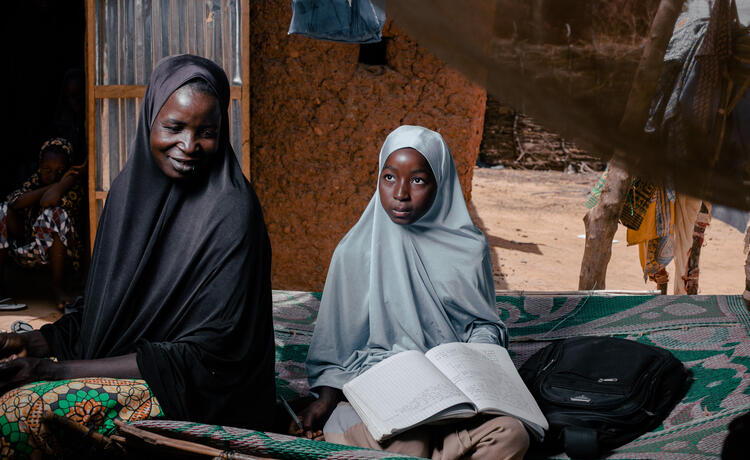
Decades of work on gender equality have demonstrated how transforming long-held and seemingly intractable discriminatory norms and structures can empower women and girls and enable them to exercise their human rights, without fear of violence or reprisal. But for this to be achieved, change must happen at all levels – from structural to individual.
Women and adolescent girls need greater agency, choice and access in order to have more decision-making and bodily autonomy over their sexual and reproductive health and rights. When they can live free of discrimination and violence and pursue their goals, they are exercising their agency. When they have the power to exercise choice, they can chart their own decisions about their lives and bodies. When they have access to acceptable, affordable and quality services, they survive and thrive.
UNFPA supports these efforts by identifying pathways to gender equality that enhance and accelerate agency, choice and access, as outlined in its gender strategy. UNFPA also utilizes gender transformative and human rights–based approaches as the basis of all of its programmes, which are fundamental to achieving the outcomes envisioned in the UNFPA Strategic Plan 2026-2029.
Addressing gender inequality requires strategic interventions at all levels of programming and policy making. Key issues include:
Sexual and reproductive health and rights: Women’s ability to control their own fertility is fundamental to their empowerment and equality. When a woman can plan her family, she can plan the rest of her life. Protecting and promoting her reproductive rights – including the right to decide the number, timing and spacing of her children – is essential to ensuring her freedom to participate more fully and equally in society. Every two minutes a woman dies during pregnancy or childbirth. Failure to provide the information, services and conditions that help women protect their reproductive health constitutes gender-based discrimination and is a violation of the human rights to health and life.
Gender-based violence: This is one of the most pervasive human rights violations globally, manifesting across all sectors and systems, and spiking during crises. Its elimination is central to realizing gender equality. UNFPA prioritizes ending all forms of gender-based violence, including the harmful practices of female genital mutilation and child marriage. The only way to ensure women and girls can live with dignity and exercise full agency is to ensure they live free from violence and coercion.
Addressing social and gender norms: Adopting a gender transformative approach to UNFPA programming means challenging gender inequality by changing harmful gender norms, roles and relations, while working to redistribute resources more equally. To build an understanding of men’s and women’s practices and attitudes related to gender equality, UNFPA and Equimondo published the largest ever global study on men, masculinities and gender equality, which aims to inform, drive and monitor progress, particularly at the government policy level.
Economic empowerment: The link between economic development and respecting women’s bodily autonomy, ambition, time and contributions remains mostly unrecognized; for women and girls facing intersecting forms of discrimination and marginalization, the discrimination is only intensified. Women’s participation in the formal economy remains limited, and they still largely receive lower pay than men. Their care work is similarly undervalued: There is no country in the world where men’s contributions to unpaid care work or reproductive labour are equal to those of women – a burden reflected in the gender gap in labour-force participation, and which only deepens with parenthood.
When women’s health, family size, child spacing and economic circumstances are balanced and planned, they can better manage care-giving and employment. The result is increased agency, well-being and available human capital. This balance can be facilitated by a range of private and public interventions, including increased sharing of care work and reproductive labour in the household and more gender-responsive health and social protection policies.
Educational empowerment: Globally, about two thirds of illiterate adults are women. Lack of education severely restricts a woman’s access to information and opportunities. Conversely, increasing education for women and girls benefits individuals and future generations alike. Higher levels of education for women are strongly associated with lower infant mortality rates and better outcomes for their children.
Political empowerment: Gender equality cannot be achieved without the backing of – and enforcement by – institutions. However, too many social and legal institutions still do not guarantee women equality in basic legal and human rights, in access to or control of resources, in employment or earnings, or in social or political participation. Men continue to occupy most positions of political and legal authority – globally, only around 27.5 percent of parliamentarians are women. And laws against domestic violence are often not enforced on women’s behalf.
Investment in youth and adolescent girls: The world’s largest-ever generation of young people represents an unparalleled opportunity for progress, provided they are empowered to reach their potential. UNFPA commits to investing in adolescent girls and youth to ensure they have access to accurate information and quality services. This includes comprehensive sexuality education and opportunities for meaningful participation and leadership. Guided by the UN Core Principles for Meaningful Youth Participation, UNFPA integrates youth as active co-architects of their own futures, ensuring that youth-led solutions in sexual and reproductive health and rights are central drivers of the road to 2030.
Gender-responsive data, accountability and financing: Sustained progress on gender equality requires more than policy – it demands accountability. UNFPA advocates for the collection and use of data disaggregated by age, sex and disability status to accurately track progress, expose inequities and guide resource allocation. UNFPA works to ensure that national budgets and aid flows are gender responsive, maximizing the impact and sustainability of all development and humanitarian efforts.
Updated 17 June 2026